Choose a clear purpose
Consider what someone should do with the brochure after your conversation. They may need to explain the demonstrated application to a colleague. In that case, a clear product image, a brief description and the essential requirements are more useful than several pages of company history. A technical assessment may instead require a precise specification sheet.
Separate these purposes if one document becomes confusing. A short introductory leaflet can point to a more detailed data sheet. Give files and printed versions clear names so the team does not accidentally distribute conflicting editions during the same event.
Work with a real printout
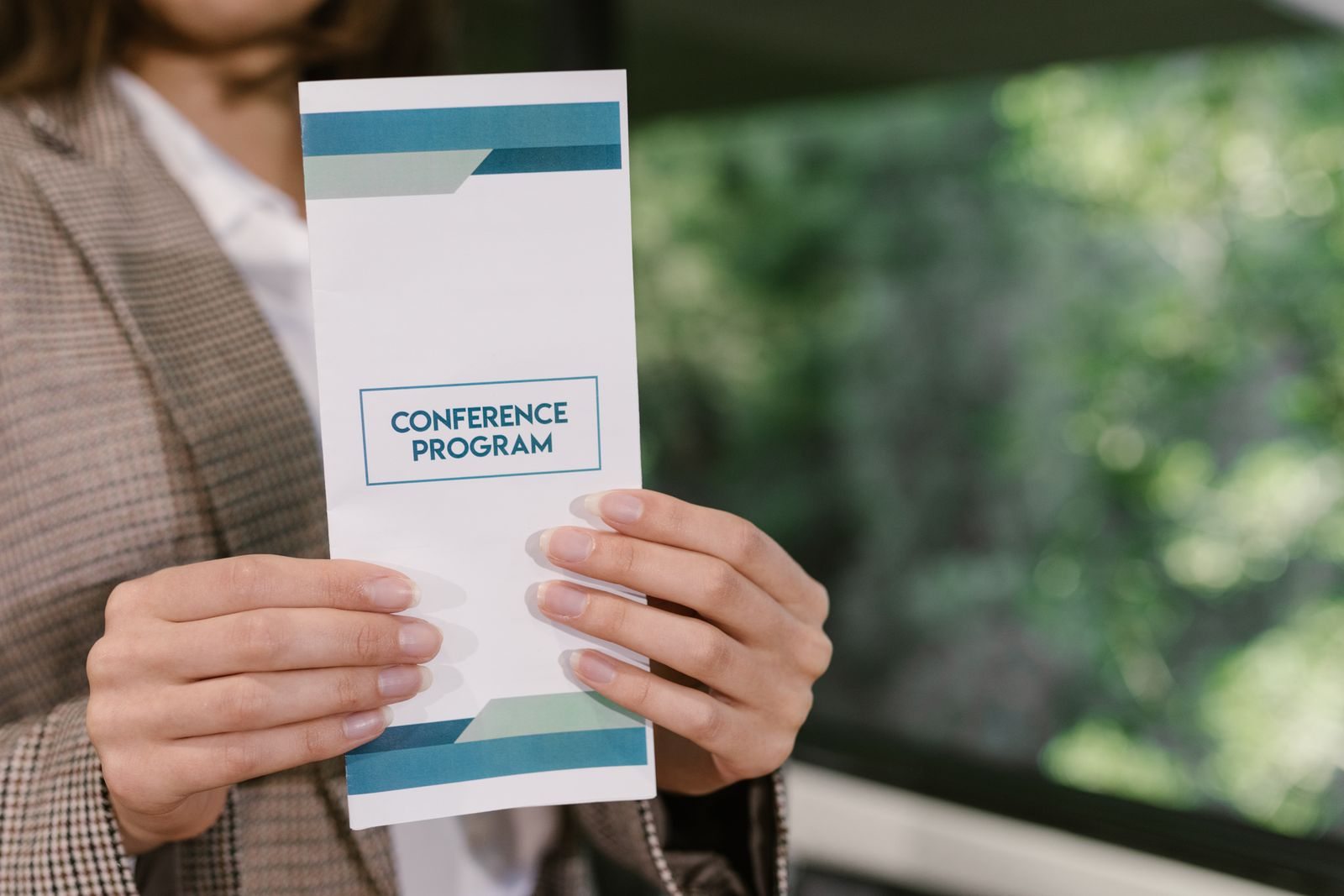
Check the brochure printed and folded, not only enlarged on a screen. Small type, an awkward fold and weak contrast become obvious this way. Contact details, the web address and product names must be readable without guesswork. A decorative background should never obscure important technical information.
Ask someone outside the project to find a particular detail. Can they locate the product dimensions or contact person without an explanation? Correct those obstacles first. Adding another paragraph of benefits does not improve a document whose basic information remains difficult to navigate.
Think about distribution and reprints together
Display a manageable quantity and keep dry, organised reserves nearby. This maintains a tidy presentation and avoids creating large leftovers when information changes. During the show, note which version people request and which remains untouched. That observation is more useful than a general assumption about demand.
Identify the current file version internally and remove superseded editions from the shared printing folder. If a conversation calls for a personal note, leave a blank area for it. Write only the agreed information there and avoid handwritten changes that contradict the document's official performance claims. Check the replacement printout before ordering another substantial batch.